
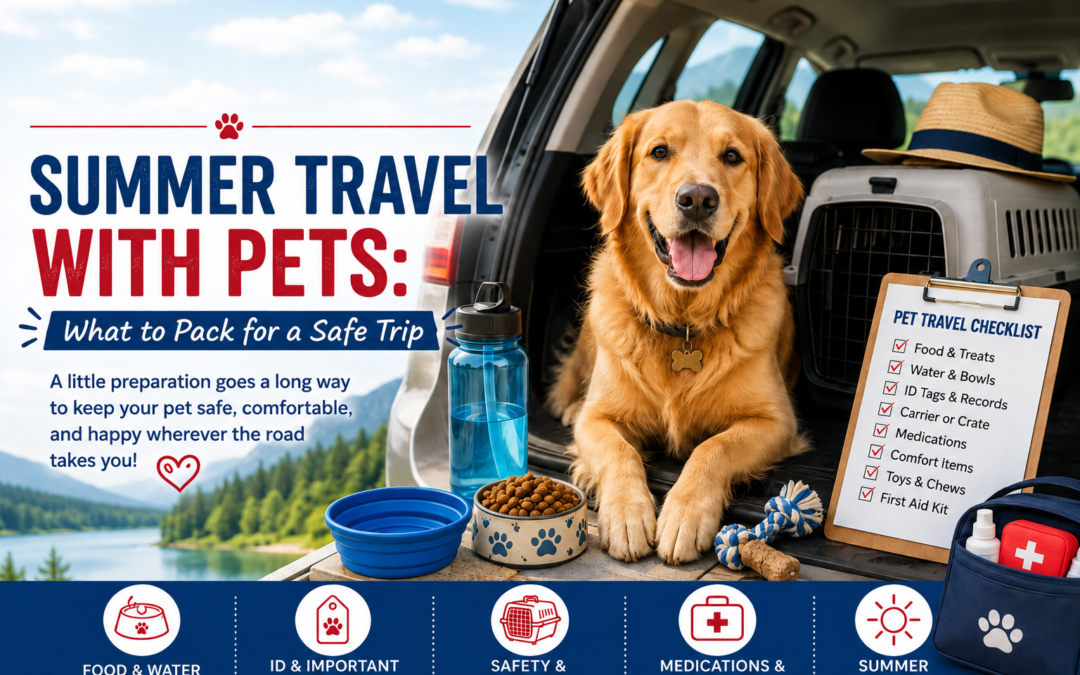
Summer is a popular season for vacations, road trips, and weekend adventures. For many families, those plans include bringing a beloved dog or cat along for the journey.
Traveling with pets can be enjoyable and memorable, but it requires careful preparation. Packing the right food, safety equipment, comfort items, and medical supplies can help reduce stress and keep your pet safe throughout the trip.
Before you leave, use this guide to make sure you have everything your pet may need.
Pack Enough Food and Fresh Water
Bring enough of your pet’s regular food to last for the entire trip, along with a little extra in case your return is delayed.
Changing food suddenly can lead to digestive problems, especially when your pet is already adjusting to a new environment. Keeping their meals familiar and following their normal feeding schedule can help them feel more comfortable.
Remember to pack:
Food bowls
Water bowls
Your pet’s regular food
Bottled water or a portable water container
Favorite treats
A food scoop or measuring cup
Portable or collapsible bowls are useful for road trips because they are easy to store and clean.
Bring Identification and Important Records
Check your pet’s identification tag before leaving home. Make sure the name, phone number, and other contact details are current and easy to read.
You should also bring copies of important records, including:
Vaccination records
Microchip information
Medication details
Your veterinarian’s contact information
Emergency veterinary contacts near your destination
Pet insurance information, when applicable
Consider adding a temporary tag with the address or phone number of the place where you will be staying.
Updated identification can greatly improve the chances of being reunited with your pet if they become lost.
Use a Secure Carrier or Restraint
Pets should always be properly secured while traveling in a vehicle.
Cats should travel inside a sturdy, well-ventilated carrier. Dogs should be secured with an appropriately fitted travel crate or a crash-tested harness designed for vehicle use.
Allowing a pet to move freely around the vehicle can be dangerous. An unrestrained pet may distract the driver, interfere with vehicle controls, or be seriously injured during sudden braking or an accident.
Place a familiar blanket or towel inside the carrier to make the space feel more comfortable. Make sure the carrier or crate is secured so it cannot slide or tip over during the journey.
Pack Comfort Items From Home
New surroundings, unfamiliar noises, and changes in routine can make pets anxious. Bringing familiar items from home can help them feel safer.
Useful comfort items include:
A favorite blanket
Their regular bed
Familiar toys
Chew toys
Comfort treats
A familiar-smelling towel or piece of bedding
Avoid packing valuable or irreplaceable items that could easily become lost during the trip.
Prepare Medications and First Aid Supplies
When your pet takes prescription medication, bring enough for the entire journey and pack extra doses in case of unexpected delays.
Keep medication in its original labeled container and store it according to the veterinarian’s instructions.
A basic pet travel first aid kit may include:
Prescription medications
Gauze
Bandages
Adhesive tape
Pet-safe antiseptic wipes
Disposable gloves
Tweezers
A tick-removal tool
A digital thermometer
Emergency contact information
A first aid kit can help with minor injuries, but it is not a replacement for professional veterinary care. Contact a veterinarian when your pet is sick, injured, or showing unusual symptoms.
Include Waste and Cleaning Supplies
Accidents and messes can happen, especially during long journeys.
Pack enough cleaning and waste supplies to keep your pet and travel area comfortable.
Consider bringing:
Waste bags
A portable litter box for cats
Cat litter and a scoop
Paper towels
Pet-safe cleaning wipes
Disposable bags
An extra towel
Spare bedding
Keeping the travel area clean can make the experience more pleasant for everyone.
Plan Regular Breaks
Dogs should be given regular opportunities to stretch, drink water, and relieve themselves during long road trips.
Always keep your dog on a secure leash before opening the vehicle door. Unfamiliar rest areas can contain traffic, loud noises, other animals, and many distractions.
Cats should usually remain inside their secure carriers during stops. Opening a cat carrier outdoors or inside an unsecured vehicle can create a serious escape risk.
Plan your stops before leaving and look for safe, pet-friendly rest areas along the route.
Protect Your Pet From Summer Heat
Warm weather can become dangerous very quickly inside a vehicle. Never leave your pet unattended in a parked car, even with the windows partly open or the air conditioning recently running.
On hot days:
Travel during cooler hours when possible
Keep the vehicle properly ventilated
Offer water regularly
Limit strenuous outdoor activity
Avoid hot pavement
Provide access to shade
Watch your pet closely for signs of overheating
Warning signs of heat-related illness may include excessive panting, heavy drooling, weakness, vomiting, confusion, bright red gums, or collapse.
Move your pet to a cooler area and seek emergency veterinary assistance immediately if you suspect heatstroke.
Check Your Destination in Advance
Before beginning your trip, confirm that your accommodation allows pets and review any rules, fees, or restrictions.
Research nearby veterinary clinics, emergency animal hospitals, pet-friendly parks, and safe walking areas. You should also check whether your destination requires specific vaccination records, health certificates, or travel documentation.
Planning these details in advance can prevent stressful surprises after you arrive.
Help Your Pet Adjust
Once you reach your destination, give your pet time to become comfortable.
Set up their food, water, bed, litter box, and other familiar items in a quiet area. Keep doors and windows secure, especially while your pet is still adjusting to the new surroundings.
Try to maintain familiar feeding, walking, play, and sleeping routines. A predictable schedule can help your pet settle in more quickly.
Make Every Journey Safer and More Comfortable
Traveling with pets can create wonderful memories when safety and preparation come first. Packing familiar food, identification, secure travel equipment, medications, comfort items, and summer safety supplies can help make the journey easier for both you and your pet.
Before your next adventure, visit Cozy Critter Rescue for helpful pet-care resources, responsible travel guidance, and information about supporting animals in need.