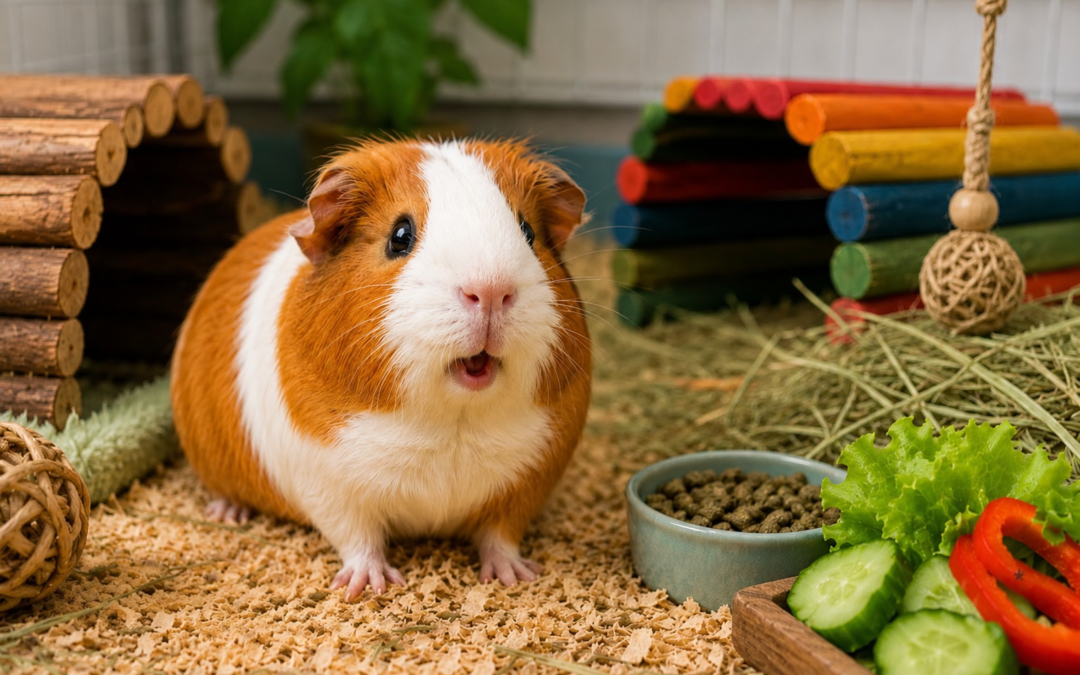
Guinea pigs may be small, but they have plenty to say. These social little pets use a wide range of squeaks, rumbles, purrs, and other sounds to express excitement, hunger, comfort, fear, and frustration.
For new guinea pig owners, understanding these noises can take some time. By listening carefully and paying attention to your pet’s body language, you can learn what they are trying to communicate and develop a closer, more trusting relationship.
Here are some of the most common guinea pig sounds and what they may mean.
Wheeking: “I’m Excited!”
Wheeking is one of the most familiar guinea pig sounds. It is a loud, high-pitched squeal that often starts when your guinea pig hears a food bag rustling, notices the refrigerator opening, or sees you approaching with a favorite treat.
Wheeking can indicate:
Excitement
Anticipation
Hunger
Happiness
Guinea pigs are very good at learning routines. Once they know when feeding time usually happens, they may wheek enthusiastically to make sure you do not forget their meal or snack.
Purring: Pay Attention to the Context
Purring can mean different things depending on the tone of the sound and your guinea pig’s body language.
A soft, gentle purr often suggests that your guinea pig feels calm, comfortable, and content. You may hear it while gently petting them or when they are relaxing in a familiar environment.
A deeper or more tense purr may indicate irritation, nervousness, or discomfort. When this sound is accompanied by a stiff posture or restless behavior, your guinea pig may be asking for space.
Observing the situation will help you understand which type of purr your pet is making.
Teeth Chattering: “Please Back Off”
Rapid teeth chattering is usually a warning sound. Your guinea pig may make this noise when they feel threatened, annoyed, frightened, or protective of their space.
Teeth chattering can be associated with:
Annoyance
Fear
Territorial behavior
Stress
This sound may also occur when guinea pigs are establishing boundaries or working out social dominance.
When you hear teeth chattering, give your guinea pig some space and allow them time to settle down.
Rumble Strutting: Showing Confidence
Rumble strutting involves a low, vibrating rumble combined with a slow, side-to-side walking motion.
Guinea pigs may rumble strut when they are:
Establishing dominance
Trying to impress another guinea pig
Displaying confidence
Communicating during social interactions
Although the behavior may look unusual or amusing, it is generally a normal part of guinea pig communication.
Chirping: A Rare and Mysterious Sound
Chirping is one of the least common guinea pig sounds. It can sound surprisingly similar to a bird and may catch owners completely by surprise.
The exact reason guinea pigs chirp is not fully understood. It may be connected to stress, unusual environmental changes, or communication with other guinea pigs.
Because chirping is rare, it is important to observe your pet’s surroundings and body language. If your guinea pig appears distressed or begins behaving differently, consider contacting an experienced veterinarian.
Getting to Know Your Guinea Pig
Every guinea pig has a unique personality and communication style. The more time you spend observing your pet, the easier it will become to recognize what their different sounds and behaviors mean.
Listening to their vocalizations and watching their posture can help you understand when they are happy, hungry, nervous, uncomfortable, or simply looking for your attention.
Thinking about welcoming a guinea pig into your home or learning more about caring for one? Visit Cozy Critter Rescue to explore helpful small-animal care resources and discover how you can support guinea pigs and other pets in need.